YAMAHA 63P-11500-02-00 Outboard Balancer 05-2008 150HP
fits make: Yamaha.
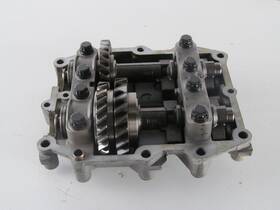
( Manufacturer Part Number: 63P-11500-02-00 ), ( Part Type: Balancer ), ( Warranty: 90 Day ), ( Country Of Origin: United States ), ( Donor Motor: 2006 F150txr Yamaha Outboard )
Review YAMAHA Oem 05-2008 150hp Outboard Balancer Assy fits F150
The **Yamaha F150 150HP Outboard Balancer (Part Number: 63P-11500-02-00, Model Year: 2008)** is a precision-engineered component designed to optimize the performance, reliability, and longevity of Yamaha s high-performance F150 150 horsepower outboard motor. This critical accessory is specifically engineered to correct and mitigate the natural imbalance that occurs in the rotating components of the engine, particularly the crankshaft and flywheel assembly, which can lead to excessive vibration, premature wear, and reduced fuel efficiency. Crafted from high-grade, durable materials, the balancer is meticulously balanced to ensure smooth operation, minimizing harmful vibrations that could affect both the motor s internal components and the boat s structure. Ideal for marine applications where power, precision, and durability are paramount, this balancer is a direct-fit replacement for the original equipment found in Yamaha s F150 150HP outboards from the 2008 model year, ensuring seamless integration without the need for modifications. Whether used in recreational fishing boats, speedboats, or performance cruisers, this balancer enhances the overall driving experience by delivering a quieter, more stable ride while extending the life of the engine. Its robust construction and compatibility with Yamaha s advanced outboard technology make it an essential upgrade for boat owners seeking to maximize performance and reduce maintenance costs.
### **Pros and Cons of buying a Yamaha F150 150HP Outboard (63P-11500-02-00, 2008 Model) with Balancer**
#### **Pros**
1. **Reliable Brand Reputation** Yamaha is a well-known manufacturer with a strong track record for durability and performance in outboard engines. Their F-Series engines are particularly respected for their balance of power and efficiency.
2. **Proven Performance** The 150HP rating is suitable for mid-sized boats (18 24 feet), offering strong acceleration and cruising speed. It performs well in both freshwater and saltwater environments, though saltwater use may require more frequent maintenance.
3. **Fuel Efficiency** Compared to older outboards, the F150 is relatively fuel-efficient for its power output, which can save on operating costs over time.
4. **Balancer Included** The inclusion of a balancer (likely a vibration dampener) suggests the engine has been modified or upgraded to reduce excessive vibration, which is common in older Yamaha outboards. This can improve comfort and longevity if installed correctly.
5. **Aftermarket Support** Yamaha has a vast network of dealers, parts suppliers, and mechanics, making repairs and maintenance easier than with less common brands.
6. **Potential for Upgrades** The 2008 model is still relatively modern for a used outboard, and many components (such as fuel systems, electronics, and cooling) can be upgraded for better performance.
7. **Lower Purchase Price** As a used engine, especially from 2008, the cost is likely significantly lower than a new model, making it an attractive option for budget-conscious buyers.
8. **Compatibility with Common Boats** The F150 is a standard size for many mid-range boats, so finding a suitable mount and installation may be straightforward.
---
#### **Cons**
1. **Age and Wear** Being from 2008, the engine has been in use for over a decade, which means it may have accumulated wear in critical components like the lower unit, pistons, or fuel system. A thorough inspection is essential.
2. **Potential for Hidden Issues** Without a service history, there could be unaddressed problems such as:- **Lower Unit Wear** Older outboards often suffer from propeller shaft or gearbox wear, leading to leaks or poor performance.
- **Fuel System Problems** Carbureted or older fuel-injected systems may develop clogs, leaks, or corrosion over time.
- **Electrical Failures** Starter motors, ignition systems, or wiring can degrade, especially if the engine has been exposed to moisture.
- **Coolant System Corrosion** Saltwater exposure or lack of maintenance can cause internal corrosion, reducing the engine s lifespan.
3. **Balancer Limitations** While a balancer helps reduce vibration, it does not fix underlying imbalances caused by worn components. If the engine was vibrating excessively before the balancer was added, the root cause (e.g., bent crankshaft, uneven pistons) may still exist.
4. **Emissions and Regulations** Older outboards may not meet current emissions standards in some regions, which could limit where the boat can be operated or require modifications.
5. **Parts Availability** While Yamaha parts are widely available, some specialized components (e.g., rare seals or gaskets) may be harder to find than in newer models.
6. **Fuel Type Compatibility** If the engine runs on leaded fuel (common in older models), you ll need to ensure compatibility with your fuel supply, as many modern stations no longer sell it.
7. **Potential for Overhaul Costs** If the engine requires major work (e.g., rebuilding the lower unit, replacing the crankshaft, or overhauling the fuel system), the cost could approach or exceed that of a newer used engine.
8. **Market Value Depreciation** Even with a balancer, the engine s value will continue to decline over time, and reselling it later may not yield a high return.
---
### **Conclusion**
Buying the **Yamaha F150 150HP (2008) with a balancer** can be a cost-effective choice if you prioritize reliability, brand reputation, and the potential for performance improvements. However, the engine s age introduces risks of hidden mechanical issues that could lead to costly repairs. The balancer is a positive sign, but it does not guarantee the engine is in perfect condition it may only mitigate symptoms of deeper problems.
**This purchase is best suited for:**- Buyers who can afford a **thorough pre-purchase inspection** (including lower unit, fuel system, and electrical checks).
- Those who plan to **use the engine sparingly** (e.g., occasional boating) and are prepared for potential maintenance.
- Individuals who are **comfortable with DIY repairs** or have access to a trusted mechanic.
- Buyers who find the engine at a **significantly discounted price** relative to comparable used outboards.
**Avoid this purchase if:**- You cannot verify the engine s full service history or obtain a professional inspection.
- The seller is unwilling to provide documentation or warranties.
- You plan to use the engine **heavily** (e.g., daily fishing or cruising) without knowing its true condition.
- You are unwilling to invest in potential **major repairs** (e.g., lower unit replacement, crankshaft work).
---
### **Recommendation**
1. **Get a Professional Inspection** Hire a marine mechanic to:- Check for **lower unit wear** (propeller shaft, gears, seals).
- Inspect the **fuel system** (carburetor, injectors, fuel lines).
- Test **electrical components** (starter, ignition, wiring).
- Assess **coolant system health** (for corrosion or leaks).
- Verify the **condition of the balancer installation** (was it properly fitted?).
2. **Compare with Alternatives** Consider newer used Yamaha outboards (e.g., F250 or F300 from the late 2000s or early 2010s) if the price difference is minimal after inspection. Brands like **Mercury or Suzuki** also offer reliable options in this power range.
3. **Negotiate Based on Inspection** If the inspection reveals issues, use them to negotiate a lower price or request repairs before purchase.
4. **Budget for Maintenance** Allocate funds for:- **Immediate fixes** (e.g., replacing worn seals, cleaning fuel system).
- **Future preventive maintenance** (e.g., coolant flushes, fuel system upgrades).
5. **Consider a Warranty or Guarantee** If possible, seek a **limited warranty** from the seller or a dealer to cover post-purchase issues.
**Final Verdict:**The **Yamaha F150 2008 with a balancer** can be a **good deal** if inspected thoroughly and purchased at a fair price. However, it carries **higher risk than a newer used outboard** due to its age. If you re willing to invest time and money into ensuring its reliability, it may be a worthwhile purchase. Otherwise, a slightly newer or better-maintained engine could offer **longer-term peace of mind**.
Details:
part #: 63p115000200 prices
- $240.00-$528.64
specifications ouboaen:
- for makes: Yamaha
- mpn: 63p-11500-02-00
- part type: Balancer
- warranty: 90 Day
- country of origin: United States
- donor motor: 2006 F150txr Yamaha Outboard
seller ouboaen:
- rating: 99.6%
- # reviews: 1235
- city: Suffolk, Virginia
general ouboaen:
- Boat Parts > Outboard Engines Components > Other
- condition: Used
offer ouboaen:
- best offers: True
- sold: 0
- started: February 11, 2026
- quantity: 1
- options: Ship-to-home
- availability: In Stock
returns ouboaen:
- policy: Returns Accepted
- paid by: Buyer
- time: 60 Days
shipping ouboaen:
- cost: $39.00
- class: Standard
- carrier: UPS
- transit: 3-9 Days
- service: UPS Ground
- type: Fixed
payments ouboaen:
- other
- credit card: Visa
- wallet: Paypal
Yamaha 63P-11500-02-00 Is Similar To:
- 65l-13610-01 65l-13610-01 Yamaha New Oem Reed (22.8% similar) Please for availability prior to purchase. We prefer shipping request with a zip code and need to know if the item is business or residence. It is less expensive to ship a business location...(July 7th, 2017)
- 0000001 Yamaha Oem Outboard Digital (42.7% similar) Display photos show actual product buyer will get...(April 20th, 2017)
- 000001 Yamaha Dual Outboard Engine (37.3% similar) Was told that one of the neutral switches replaced inside, wiring harness extension is included need to be connected back because taken apart when rigging removed from boat. Some small parts and screws might be missed. Sometimes I just was unable to test it or some parts screws might be missed. ...(September 16th, 2017)
- 0x66 Yamaha Hp Outboard Motor (39.2% similar) Replaced gear lube but likely needs seal kit or new lower end. Compression on all cylinders. It is a standard left rotation and has just over 1100 hrs. This is a 1999 yamaha 225 hp OX66 saltwater series 2 stoke with lower end had some water in gear lube...(February 3rd, 2019)
- 10319 Stiletto Stainless Prop Mercury Yamaha Outboard Propeller (29% similar) Condition: used but in good condition and guaranteed to function properly. Part: 10319 stiletto stainless prop x 19P v6 mercury yamaha outboard propeller fits various mariner motor parts. Please see included pictures...(August 24th, 2018)
- 10321 Stiletto Prop Mercury Mariner Yamaha Outboard Propeller (29.5% similar) May fit more engines. Condition: used but in good condition and guaranteed to function properly. Please see included pictures. Part: 10321 stiletto prop x 21P v6 mercury mariner yamaha outboard propeller fits various motor parts. This propeller will also fit yamaha outboard motors with the correct ...(January 7th, 2019)
- 152041 Oem Yamaha Outboard Premier Ii Cable New In Box (31.1% similar) They are yamaha premier cabled 15 foot length I have 2 available this offer is for 1 thanks good luck. I got these for a boat was working on and needed up not using them, think paid over 50 each...(July 1st, 2018)
- 16715m Mercury Mariner Yamaha Outboard Linkage Rod Connector Joint (29.9% similar) Item mercury joint, part number 16715M. New old stock from dealer close out...(December 27th, 2018)
- 17-6g512 Yamaha Ignition Pack Terminal Style Replaces Oem (19.2% similar) Save on very expensive terminal pack came off running motors...(March 17th, 2018)
- 173362 Yamaha Outboard Boat Motor (37.6% similar) Yamaha outboard motor concealed side mount - control box item is a take off and like new...(March 27th, 2017)
- 18-2374 Sierra Marine Yamaha Outboard Magnetic Drain Screw Replaces (32.6% similar) Sierra marine yamaha outboard magnetic drain screw replaces 00USES gasket not included m8 thread...(January 22nd, 2019)
